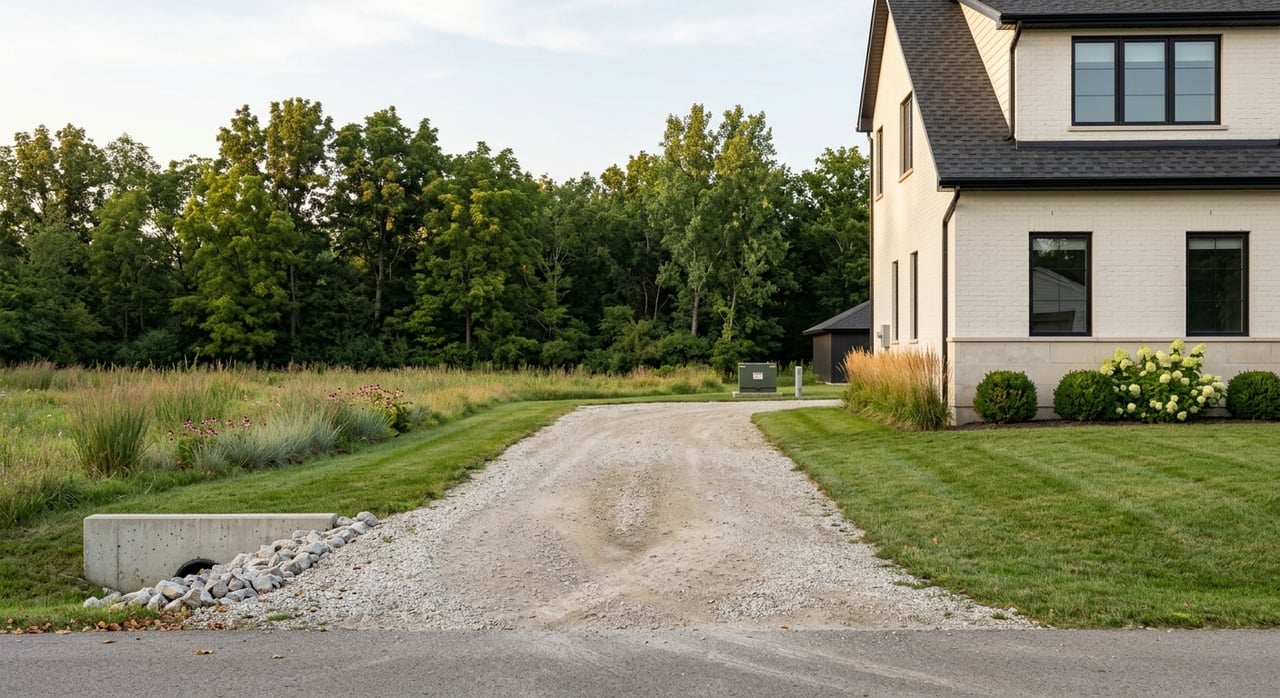
Buying Land And Acreage Around Johnstown, Ohio
July 9, 2026
July 9, 2026
Dreaming about a few quiet acres near Johnstown? It can be exciting to picture a custom home, extra space, or a long-term land investment, but buying land is not the same as buying an existing house. A parcel that looks perfect online may still need zoning review, access approval, septic evaluation, or utility planning before you can build. This guide will help you understand what to check first around Johnstown so you can move forward with more confidence. Let’s dive in.
The first question to answer is simple: Where is the parcel located? Around Johnstown, that can mean land inside the City of Johnstown, land in unincorporated township areas, or land within a platted subdivision. Each path can come with a different review process.
If the parcel is inside the City of Johnstown, the city’s Planning & Zoning Department is the place to start. The city handles zoning certificate review for new home construction, residential subdivision review, variances, conditional uses, and plat approval. Johnstown also notes that its zoning code was created to organize business, industry, and residential areas, which means your intended use and building plans need to match local requirements.
If the parcel is outside the city, township rules matter. Licking County says the county has 25 townships, with 19 zoned and 6 unzoned, so you should confirm the township before assuming the process will work like it does in the city. For unincorporated areas, county planning applications are handled through the Licking County Planning Commission.
A platted subdivision creates another layer. Licking County’s lot-split guidance says that land division or combination within a platted subdivision requires the replat process, while land divisions entirely within a municipality follow that municipality’s process. In other words, the same acreage can look very different on paper depending on whether it is raw rural land or part of an already platted area.
A large parcel is not automatically a buildable parcel. Around Johnstown, buildability often comes down to access, frontage, utilities, wastewater review, and whether the parcel needs additional approvals before construction can begin.
For land outside a city subdivision, Licking County says any division requiring platting because of new roadways, the number of lots, utility extensions, or similar factors follows the Major Subdivision Process. The county advises buyers or developers to contact planning staff early and to hire an Ohio-licensed professional engineer for feasibility and cost planning.
Frontage is one of the most practical details to verify. Licking County’s lot-split guidance says any lot split under 20 acres requires an approved driveway permit. If the parcel fronts a state or U.S. route, it needs an ODOT access permit, and if it fronts a township or county road, it needs access approval from the Licking County Engineer’s office.
The same county guidance also lists frontage standards and recommendations that can affect your plans:
Those numbers matter because a parcel can have enough acreage overall but still create layout problems for a home site, driveway, and approvals.
Many acreage purchases involve some kind of split, combination, or reconfiguration. If that is part of your plan, you need to know early because the process can affect your timeline, due diligence, and closing strategy.
Licking County’s materials explain that lots under 20 acres also need approved water and wastewater review. In zoned townships, township zoning approval may also be required. In unzoned townships, the county says land divisions still must meet county frontage standards.
This is one reason raw land and build-ready lots should not be evaluated the same way. A parcel that still needs a split, access approval, or site review may offer opportunity, but it also carries more steps and more uncertainty than a finished lot in an established subdivision.
Online parcel maps are useful for a first look, but they are not the final word on boundaries or legal description. Licking County states that its GIS data is for reference only and is not an official land survey or legal property description.
That distinction is important when you are buying acreage. Fence lines, tree rows, road frontage, and map outlines may not tell the full story. The county map department reviews surveys and legal descriptions for property transfers, and recorded plats and deeds control the actual legal description.
Utilities can change both your cost and your timeline. If you are comparing several parcels around Johnstown, this is one of the biggest factors that separates a smoother build from a more complex one.
Inside or near the city, municipal water and sewer may be part of the conversation. Johnstown posts current water and sewer rates and separate tap connection fees. The city’s tap fee sheet shows a $375 tap fee plus line-size-based capacity charges, but being near a line does not necessarily mean a lot is fully ready to connect.
For rural parcels, private systems may be required. That means you should ask early whether the property is expected to use a well, septic system, or another approved private water setup. Utility planning is often where budget expectations start to shift, so it is smart to treat this as a first-round question, not a last-minute detail.
If a property depends on septic, site conditions become a major part of your due diligence. The Licking County Health Department says anyone buying a lot or building on a lot should have the site evaluated early in the process because sewage system designs depend on site-specific soil characteristics.
The department also says that newly created lots under 5 acres require a soil evaluation by a certified soil scientist. The same applies to lots 5 acres or larger if a building site has been determined. A septic permit will not be issued until that soil evaluation is completed.
This can affect more than the septic permit itself. Soil conditions may influence where the home sits, where the driveway goes, and how much usable yard or open area remains after the septic field is placed.
Water supply is a separate issue from wastewater. The Licking County Health Department says private water systems, including wells, cisterns, hauled-water storage tanks, and ponds used for drinking water, are regulated under Ohio’s private water system rules.
The department states that a permit must be issued before installing or altering a private water system. It also performs water sampling on new and existing private water systems. If the parcel is not served by municipal water, this should be part of your early planning checklist.
Floodplain review is easy to overlook when land looks open and usable, but it can affect where you build. Licking County says it uses FEMA Flood Insurance Rate Maps, and county lot-split materials ask whether a parcel lies in a flood hazard zone.
That matters because floodplain conditions can influence the placement of a home, driveway, drainage system, or septic field. A beautiful piece of land may still have building limitations depending on where those regulated areas fall.
Access also deserves a second look. It is not just about whether the lot touches a road. You want to know which authority must approve access and whether the available frontage supports your intended use.
Not all land around Johnstown should be priced or judged the same way. In practical terms, buyers are often comparing three very different products.
The first is a build-ready lot in a subdivision. The second is a raw rural parcel with road frontage. The third is acreage that still needs approvals, access work, utility planning, or a lot split.
These options come with different risk profiles, timelines, and upfront costs. Based on the local planning, frontage, utility, and access rules, parcels with clearer utility access, better frontage, and fewer entitlement obstacles are often easier to move forward with than isolated acreage that still needs major due diligence.
Land purchases usually work best when you involve the right professionals early. That does not mean you need a huge team on day one, but it does mean knowing who can answer which questions.
A surveyor is helpful if the parcel involves a split, replat, easement, or boundary-sensitive issue. Licking County’s map department handles survey and legal-description review for property transfers, which makes survey accuracy especially important.
A professional engineer can be valuable when a parcel may need driveway design, grading, utility extension, or subdivision review. Licking County specifically recommends hiring an Ohio-licensed engineer early for feasibility and cost planning in the major subdivision process.
A soil scientist and the Licking County Health Department become important as soon as septic may be part of the plan. Their review can shape whether a property works for your intended home site and how the site must be laid out.
A builder can also be useful early, even though a builder is not the permitting authority. If you want to understand whether your preferred home footprint, driveway, grading, and septic field can realistically fit on the land, early builder input can help frame the conversation.
An attorney or title professional may also be useful when the purchase involves deed preparation, easements, or recording work. County guidance notes that approved lot-split packets move on to deed preparation and recording after review.
Johnstown is not standing still. The city’s 2024 Comprehensive Plan says it is responding to recent economic developments in the region and to investment just beyond its southern border.
Licking County’s Transportation Improvement District says it is leading road projects to support the Intel chip manufacturing plan and expected traffic growth on selected county roads leading into the Licking County Technology District. For buyers, that means land decisions around Johnstown may be shaped by more than the parcel itself.
Road access, utility positioning, frontage, and entitlement clarity can all affect how attractive a property is over time. When you are weighing acreage, it helps to think not just about what the land is today, but also how its location and readiness fit into a changing local landscape.
If you are considering land or acreage around Johnstown, a careful, local-first approach can save you time, money, and stress. The right parcel is not just about size. It is about whether the land supports the life, home, or investment plan you have in mind. If you want experienced guidance as you compare lots, acreage, and build potential in Central Ohio, connect with Angel Perez.
Stay up to date on the latest real estate trends.



Etiam non quam lacus suspendisse faucibus interdum. Orci ac auctor augue mauris augue neque. Bibendum at varius vel pharetra. Viverra orci sagittis eu volutpat.
Get in Touch With Us to Learn More

8800 Lyra Drive Suite 600 Columbus, Ohio 43240