New Albany Neighborhoods And Villages Explained
June 18, 2026
June 18, 2026
If you have ever looked at homes in New Albany and thought, these neighborhoods all seem polished, but not all the same, you are exactly right. New Albany is not a collection of random subdivisions. It is a master-planned community with distinct lifestyle areas, and understanding those differences can make your home search much easier. In this guide, you will get a simple breakdown of how New Albany neighborhoods and villages fit together, what each area tends to feel like, and how to narrow in on the right fit for your goals. Let’s dive in.
New Albany is best understood through two broad residential experiences: Country Club Living and Town Center Living. That framework comes directly from the community’s residential planning and explains many of the differences buyers notice in home style, lot size, walkability, and daily rhythm.
Across the city, the overall design is intentional. New Albany was planned around pedestrian connectivity, classic architecture, open space, and linked neighborhoods. The city reports more than 2,000 acres of open space and over 80 miles of leisure trails, which helps explain why so many areas feel connected instead of isolated.
The architectural identity also plays a big role. The community is known for Georgian-inspired design standards, white fencing, historic-style street lighting, and wooden street signs. For you as a buyer, that means a strong visual consistency even when neighborhoods differ in size, price point, and layout.
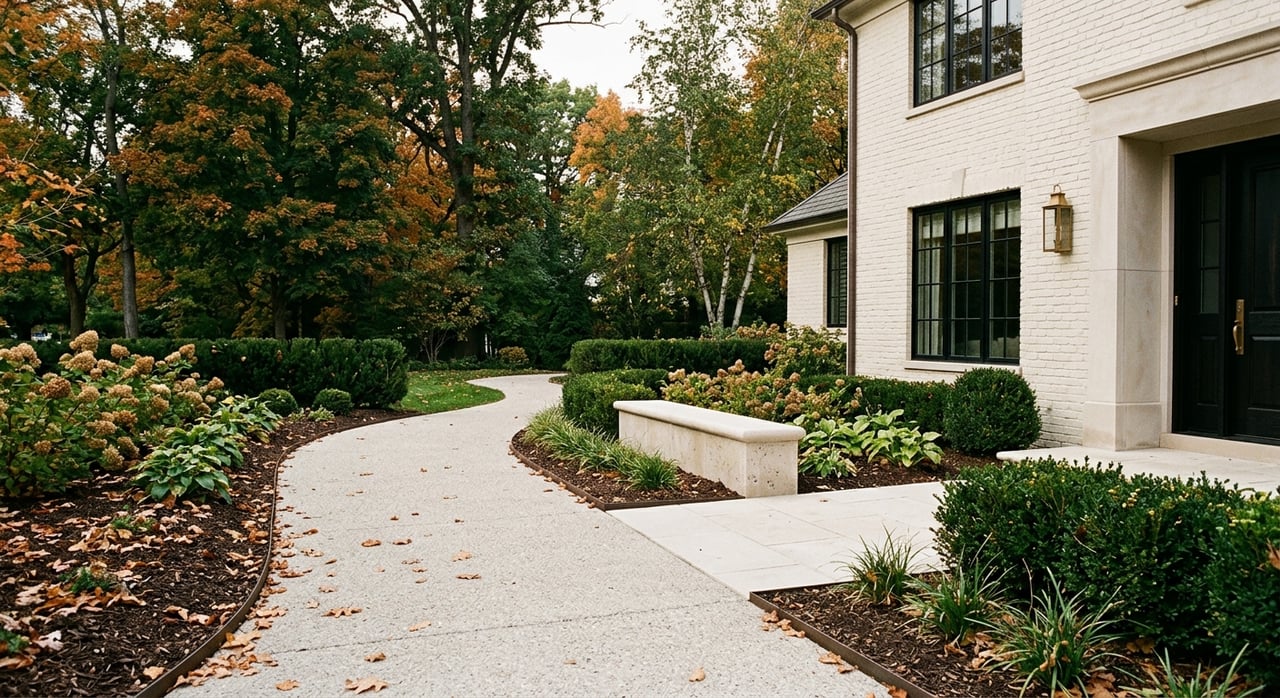
If you picture New Albany as stately homes, tree-lined streets, and golf-oriented surroundings, you are likely thinking of the Country Club side of town. This area is closely tied to the New Albany Country Club and includes neighborhoods known for sidewalks, leisure trails, water features, and a more traditional residential setting.
The developer identifies this district as having more than 1,100 homes, with a mix of existing properties and available lots for custom builds. That makes it one of the clearest options if you want a home with a more established look or you are exploring custom-home opportunities.
One of the biggest reasons buyers focus on this area is lot size. A useful benchmark is East Nine, which was described as a 37-home neighborhood with homesites ranging from half an acre to more than an acre. That gives you a real sense of the larger-lot end of the New Albany market.
Country Club neighborhoods are not all identical, but they often appeal to buyers looking for:
At the same time, this side of New Albany is not only large estate lots. City project updates show a range of subdivision formats, including Ebrington, Woodhaven, Nottingham Trace, Courtyard at New Albany, Oxford, Hawksmoor, and Straits Farm. That variety matters because it means you can find different housing formats even within the broader country-club area.
Woodhaven is a good example of how much one neighborhood can differ from another. Its approved plan included 22 age-restricted lots and 38 traditional single-family lots on about 35.7 acres. For you, that is a reminder not to assume every neighborhood in the same general area offers the same pace, layout, or housing mix.
If your ideal New Albany experience is more walkable, connected, and close to everyday destinations, Town Center Living is the area to understand. This part of the community includes single-family homes, townhomes, cluster neighborhoods, and luxury apartments near Market Square, Rose Run Park, the library, shops, eateries, and the learning campus.
The Village Center is the heart of this experience. The city describes it as a walkable and connected core built on a traditional grid pattern dating back to 1837. It is organized into five districts: Market Square, the Historic Village Center, the Learning Campus, Windsor, and Ganton.
This is where New Albany feels most compact and civic. The Village Center emphasizes mixed uses, pedestrian design, and architecture guided by the Urban Center Code. That planning approach helps create a more cohesive streetscape and a stronger sense of being near community activity.
Town Center neighborhoods often stand out for:
Rose Run Park is a major part of that identity. The city says it connects people to nature and community assets while preserving green space between Market Square and the learning campus. Portions of Market Square, Rose Run Park, and the Arts District also fall within the city’s designated outdoor refreshment area, which adds to the active feel of the core.
Windsor is a helpful example of how these smaller pocket neighborhoods function within the Village Center. The city’s 2024 park improvement outreach included all 270 homes in Windsor, showing the neighborhood-scale attention that these areas can receive.
Some of the most interesting changes in New Albany are happening in newer village-style and infill projects. These areas offer a different experience than traditional country-club neighborhoods because they are designed around shorter blocks, shared edges, walking connections, and proximity to future parks or mixed-use spaces.
The clearest example is The Hamlet at Sugar Run. The city says this 32.6-acre project at New Albany-Condit Road and Central College Road will include 40 flats, 128 townhomes, and 27 detached single-family homes. It will also feature an 8-plus-acre park around Sugar Run Creek and a half-mile leisure trail loop.
The approved standards for the Hamlet cap density at 6 units per acre and call for roughly 75% developed land and 25% parks and open space. That balance gives you a sense of the planning goal: more compact housing, but still tied closely to green space.
Another sign of where the community is headed is the Village Center mixed-use infill project north of East Main Street. The city describes it as a pedestrian-oriented development that combines residential and commercial or retail uses under the Village Center Urban Center Code. For buyers, these projects can appeal if you want a lower-maintenance lifestyle with stronger daily connections to future amenities.
In New Albany, neighborhood feel is not just about the house. It is also about what is around you. Parks, trails, and open space strongly influence how active, scenic, or connected a neighborhood may feel on a daily basis.
The city highlights a wide range of park assets across the community. Ratchford Fens sits between the Upper Fenway and Fenway subdivisions. Wexner Park is near the learning campus and Swickard Woods. Taylor Farm Park is a nearly 100-acre site bounded by Rocky Fork Creek, Dublin-Granville Road, Harlem Road, and State Route 161.
There are also major recreation hubs beyond those neighborhood-scale spaces. Bevelhymer Park spans 145 acres, and Rocky Fork Metro Park offers more than 1,200 acres with running trails, horse trails, a dog park, and additional recreation areas. If outdoor access is high on your list, these locations can become a key part of your home search strategy.
Certain areas may stand out depending on how you want to use outdoor space:
This does not mean one area is better than another. It simply means your experience of New Albany can change meaningfully based on the parks and trail connections nearest your home.
For many buyers, neighborhood choice also comes down to how easily you can move in and out of New Albany. The city says the community is within three minutes of I-270, about 15 minutes from John Glenn Columbus International Airport, and about 20 minutes from downtown Columbus.
Transportation improvements are also helping circulation inside the community. The city says the State Route 161 widening project added a third lane in each direction between I-270 and US-62. Ongoing projects on State Route 605, Walnut Street, and Market Street are also intended to improve access into and through the Village Center.
If your routine includes frequent airport travel, downtown meetings, or cross-town commuting, this can help you weigh whether you want a more interior neighborhood setting or a location with faster access to major routes.
The easiest way to narrow your search is to start with lifestyle before you focus on a specific subdivision. In New Albany, that usually means deciding whether you want space and tradition, walkability and convenience, or a newer village-style layout.
Here is a simple way to think about it:
Because New Albany has both established neighborhoods and evolving development areas, it helps to compare not just price and square footage, but also street pattern, lot size, trail access, and the kind of daily routine each location supports.
For buyers relocating to New Albany or sellers trying to position a home well, this neighborhood context can make a major difference. The right story is not just about the property. It is about how that property fits into the larger lifestyle map of the community.
If you want help sorting through New Albany neighborhoods, comparing village-style areas to country-club settings, or preparing a home for the market with a stronger neighborhood-based strategy, connect with Angel Perez.
Stay up to date on the latest real estate trends.
Etiam non quam lacus suspendisse faucibus interdum. Orci ac auctor augue mauris augue neque. Bibendum at varius vel pharetra. Viverra orci sagittis eu volutpat.
Get in Touch With Us to Learn More
8800 Lyra Drive Suite 600 Columbus, Ohio 43240